Borrower journey · Episode 1 · Oxyile Editorial
What borrowing really costs: Leo's scooter shock
15 Nov 2026
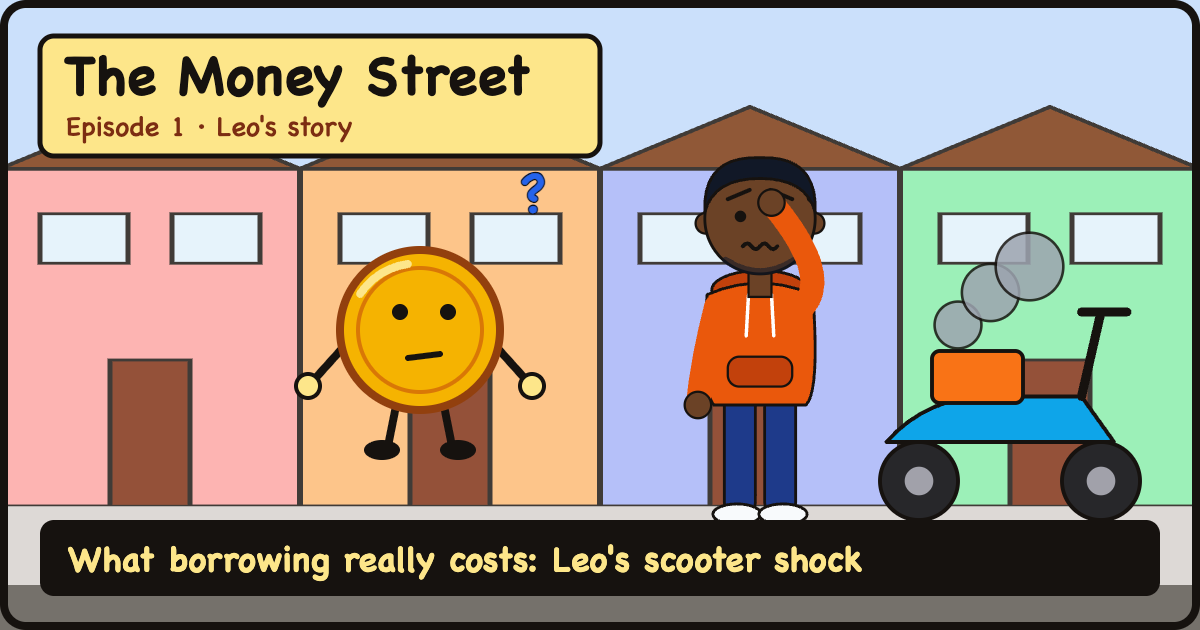
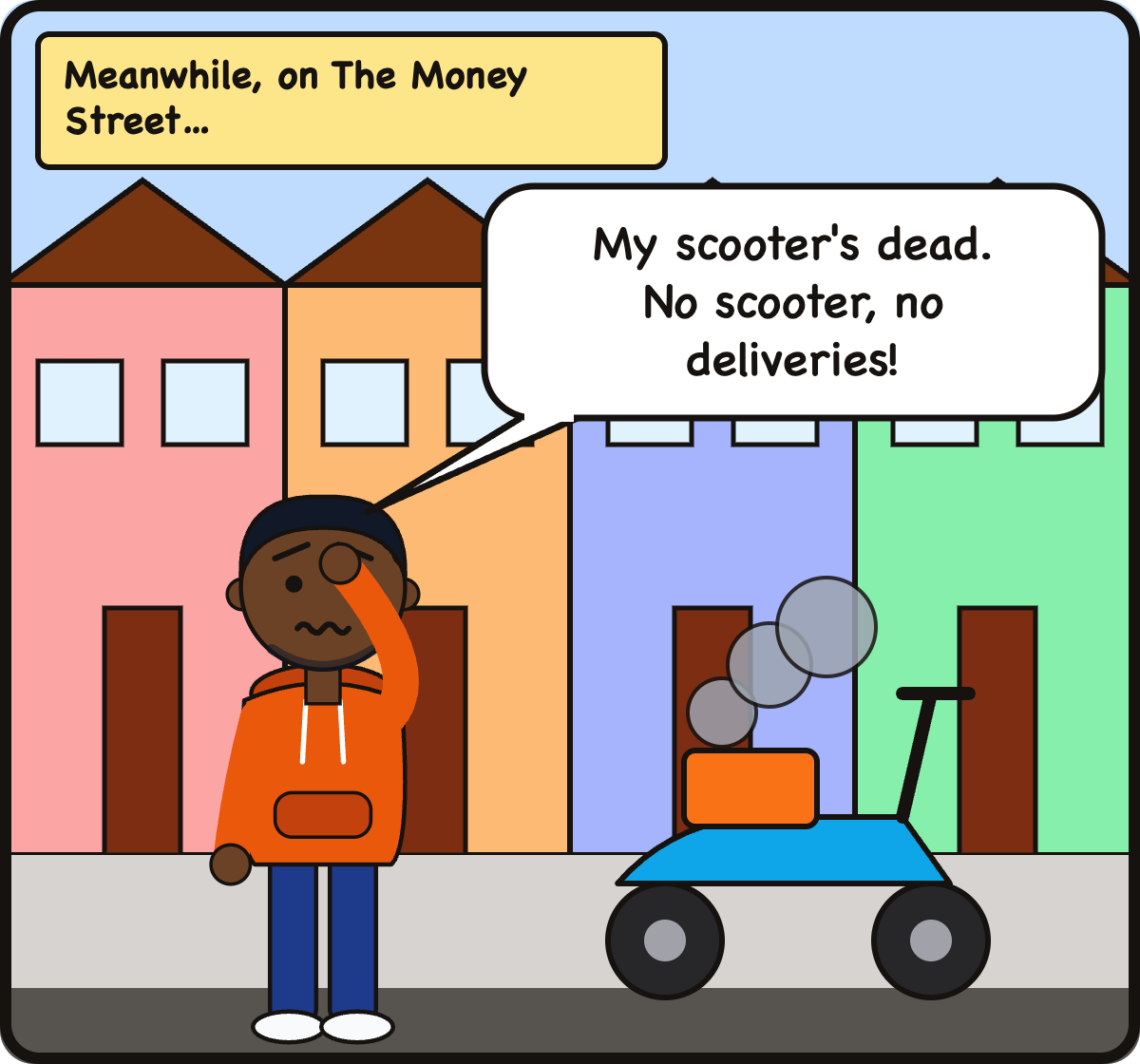
The cost of borrowing is more than the monthly payment. This week on The Money Street, Leo's scooter dies, an advert makes borrowing look easy, and Penny the £1 coin helps him see what he would really pay back.
This is Leo's story, episode 1 of 52. Every term is explained as we go.
In a nutshell
- Borrowing costs interest, and often fees as well.
- The total amount you repay matters more than the monthly payment.
- A longer loan usually means smaller payments but a bigger total cost.
The cost of borrowing in plain English
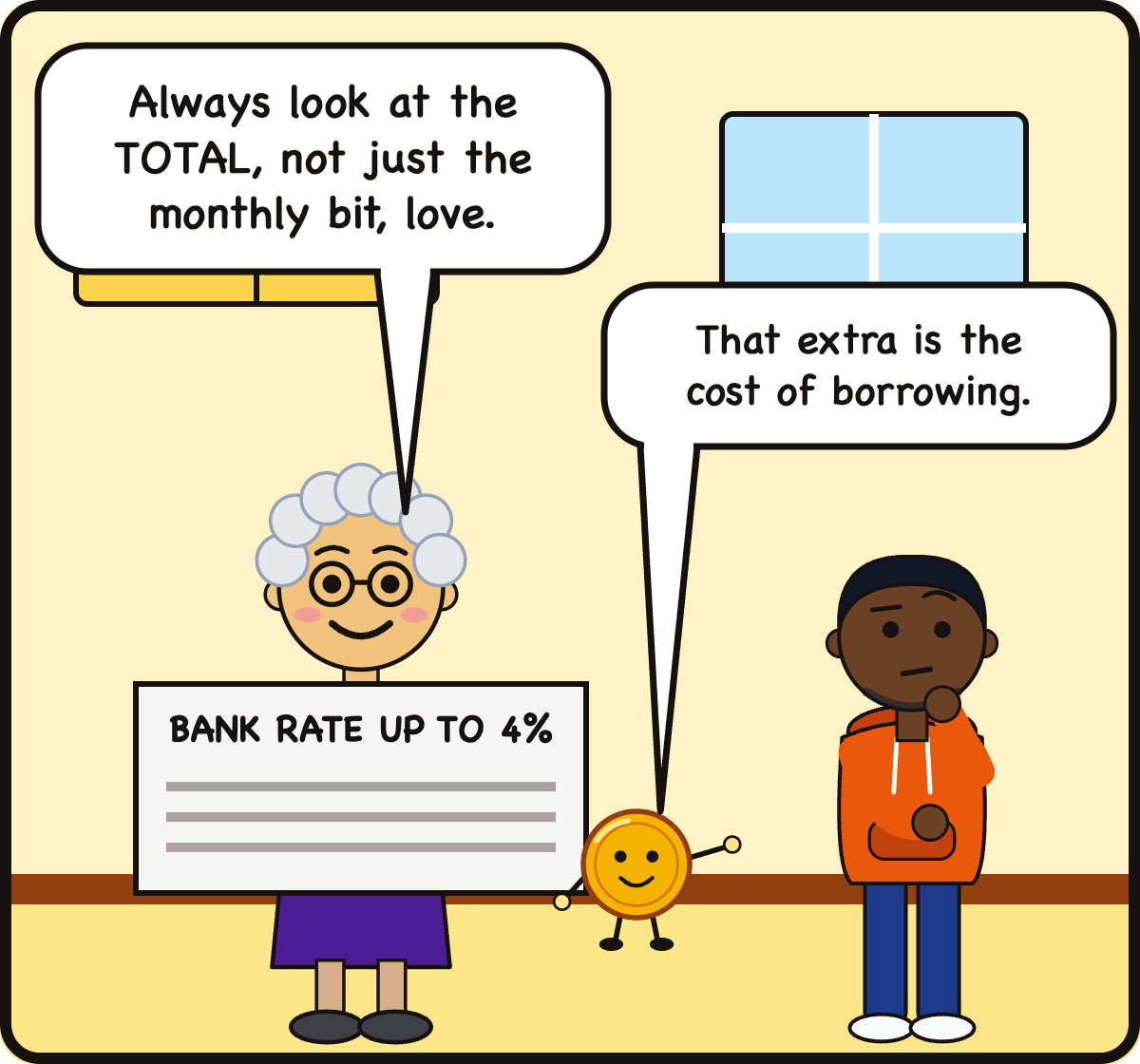
When you borrow, you pay back the amount you borrowed plus extra. That extra is the cost of borrowing.
It is made up of two things: interest (the price of using someone else's money) and fees (charges for setting up or running the loan).
Why "only £75 a month" is half the story
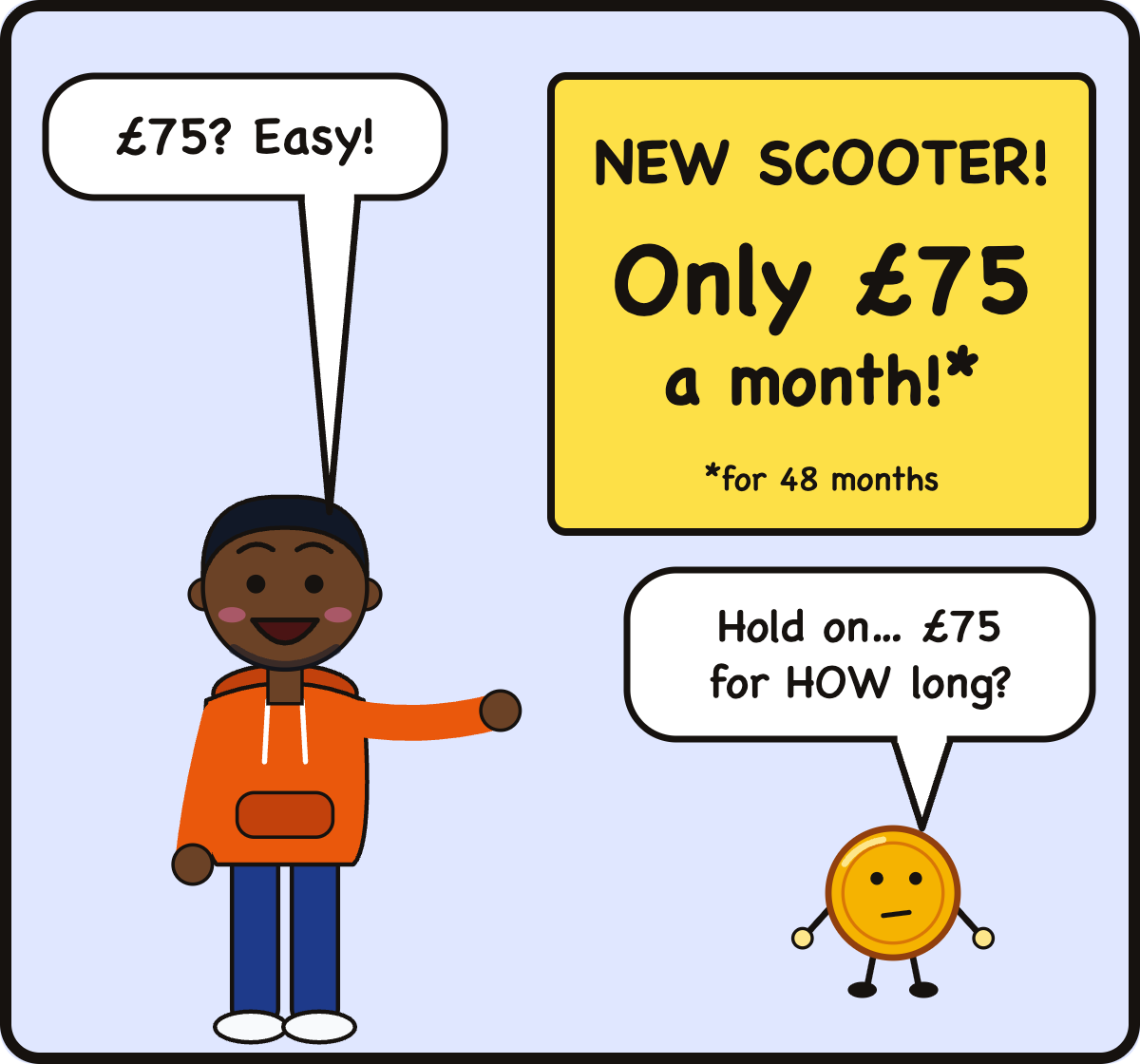
A small monthly payment can hide a long loan. Always look for how many months you will pay, and the total amount repayable (everything you pay back, added up).
APR, the annual percentage rate, shows the yearly cost of borrowing, including interest and most fees, as one percentage. It is a fairer way to compare loans than the interest rate alone. Penny explains APR properly in episode 5.
Example (illustrative only): same loan, two lengths
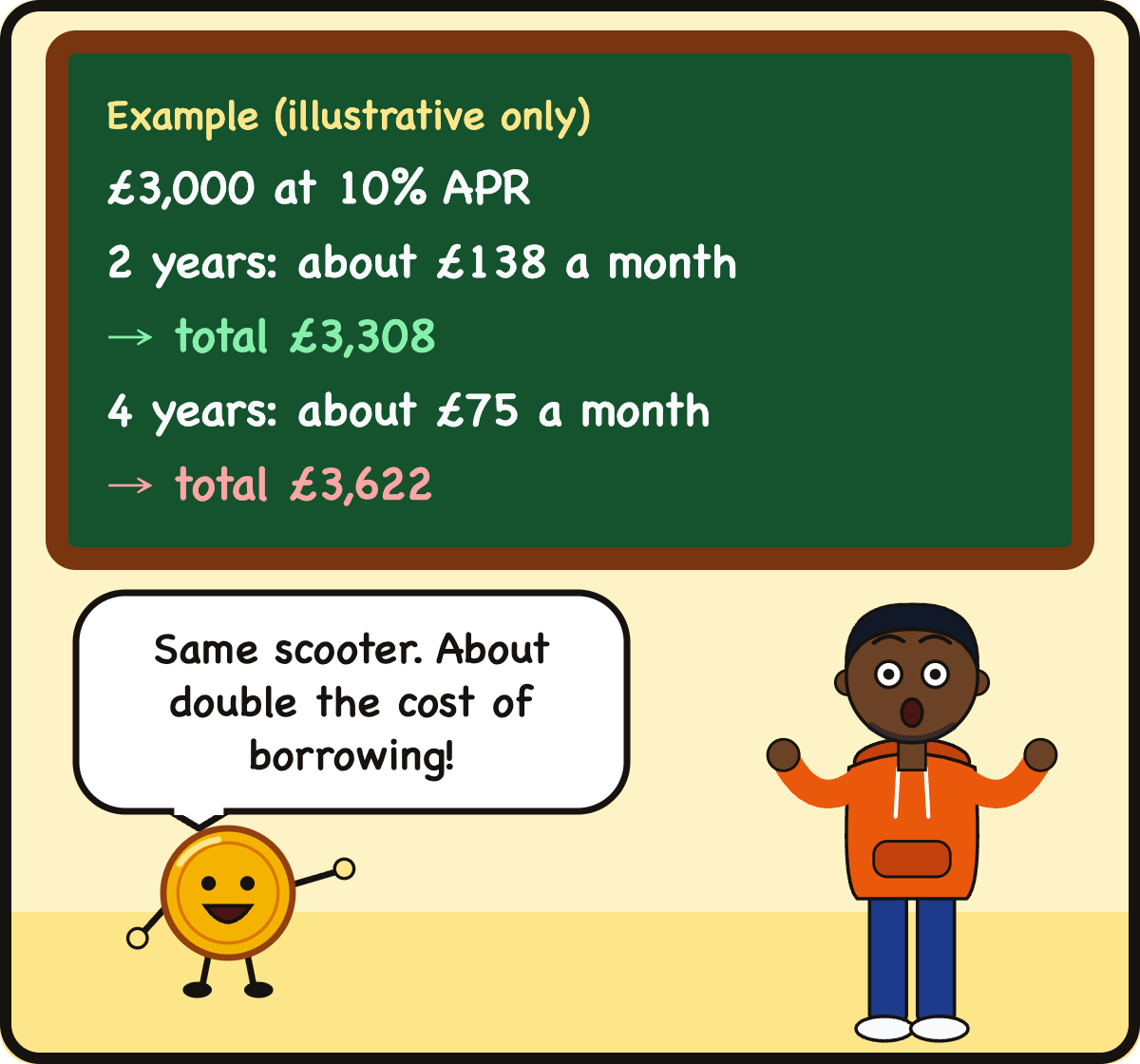
Leo looks at borrowing £3,000 at an APR of 10%. Real rates depend on the lender and on you, and can be much higher. Here is how the length of the loan changes the cost.
| Loan length | Monthly payment | Total repaid | Cost of borrowing |
|---|---|---|---|
| 2 years | about £138 | about £3,308 | about £308 |
| 4 years | about £75 | about £3,622 | about £622 |
The 4-year loan feels easier each month. But it costs roughly twice as much overall, because interest is charged for longer.
Why is the total not just £75 × 48 = £3,600? Because £75 is rounded. The exact payment is about £75.47, so the total comes to about £3,622.
Fees to look out for
- Arrangement fees: charged when the loan is set up.
- Late payment fees: charged if a payment is missed.
- Early repayment charges: sometimes charged if you pay the loan off early.
Why this week's news matters
At the time of writing, the Bank of England has just raised Bank Rate to 4% (5 November 2026). Bank Rate is its main interest rate, and lenders watch it closely. When it goes up, new borrowing often gets more expensive, and debts with a variable rate can cost more too.
A fixed rate stays the same for the agreed period, so your payments do not change. A variable rate can go up or down.
Before you borrow anything
- Do I really need to borrow, or could I save up, repair or buy second-hand instead?
- What is the total amount I will repay, not just the monthly payment?
- Could I still afford the payments if my costs went up?
- Is there a cheaper way to borrow, such as a credit union (a not-for-profit group, run by its members, that offers savings and loans)? MoneyHelper explains the options.
- Are there any fees for setting up, missing a payment or paying early?
If money is already tight
Borrowing more is rarely the answer to existing debt worries. Free, confidential help is available from charities like StepChange. You do not need to wait until things get worse to ask.
Quick recap
- The cost of borrowing is interest plus fees.
- Compare loans using the total amount repayable and the APR.
- Longer loans cost less each month but more overall.
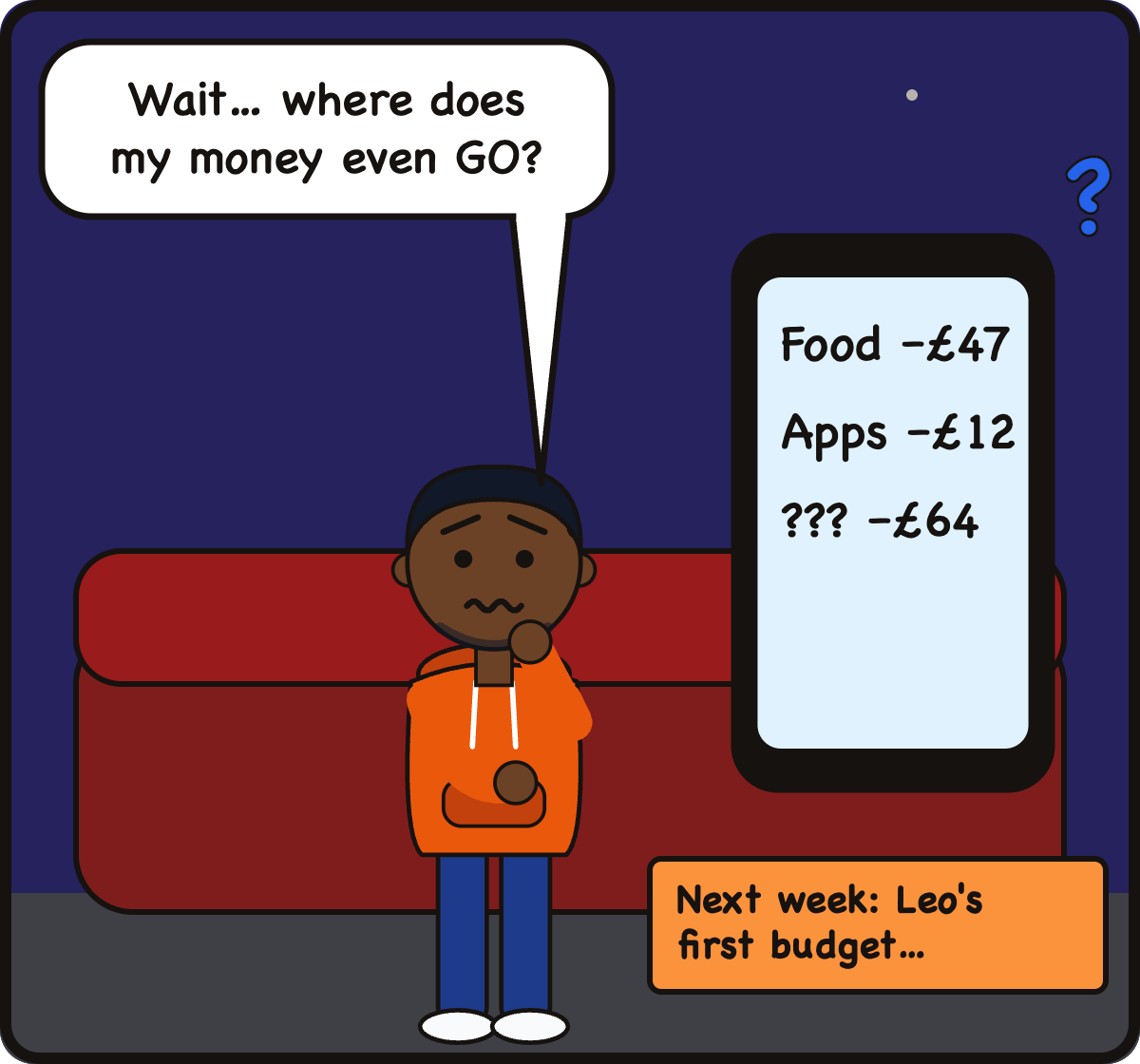
Next week: Leo opens his banking app and gets a shock. Where is his money actually going? Episode 2: Budgeting from scratch, a simple method.
This article is general information to help you understand money, not financial advice or a recommendation. Everyone's situation is different. If you are unsure, free and impartial guidance is available from MoneyHelper. Oxyile is not authorised by the Financial Conduct Authority and does not offer loans or investments to the public. The Money Street and its characters are fictional. Figures were correct at the time of writing.
Related tags
- Borrower journey
- Week 1
- Borrowing basics
- APR