Investor journey · Episode 1 · Oxyile Editorial
Saving vs investing: Penny's two roads
15 Nov 2026
Saving vs investing is the first big choice for any spare money. Meet Penny, a talking £1 coin. Follow her along The Money Street every Sunday and, step by step, see how the money world fits together.
This is Ava's story, episode 1 of 52. No jargon is left unexplained.
In a nutshell
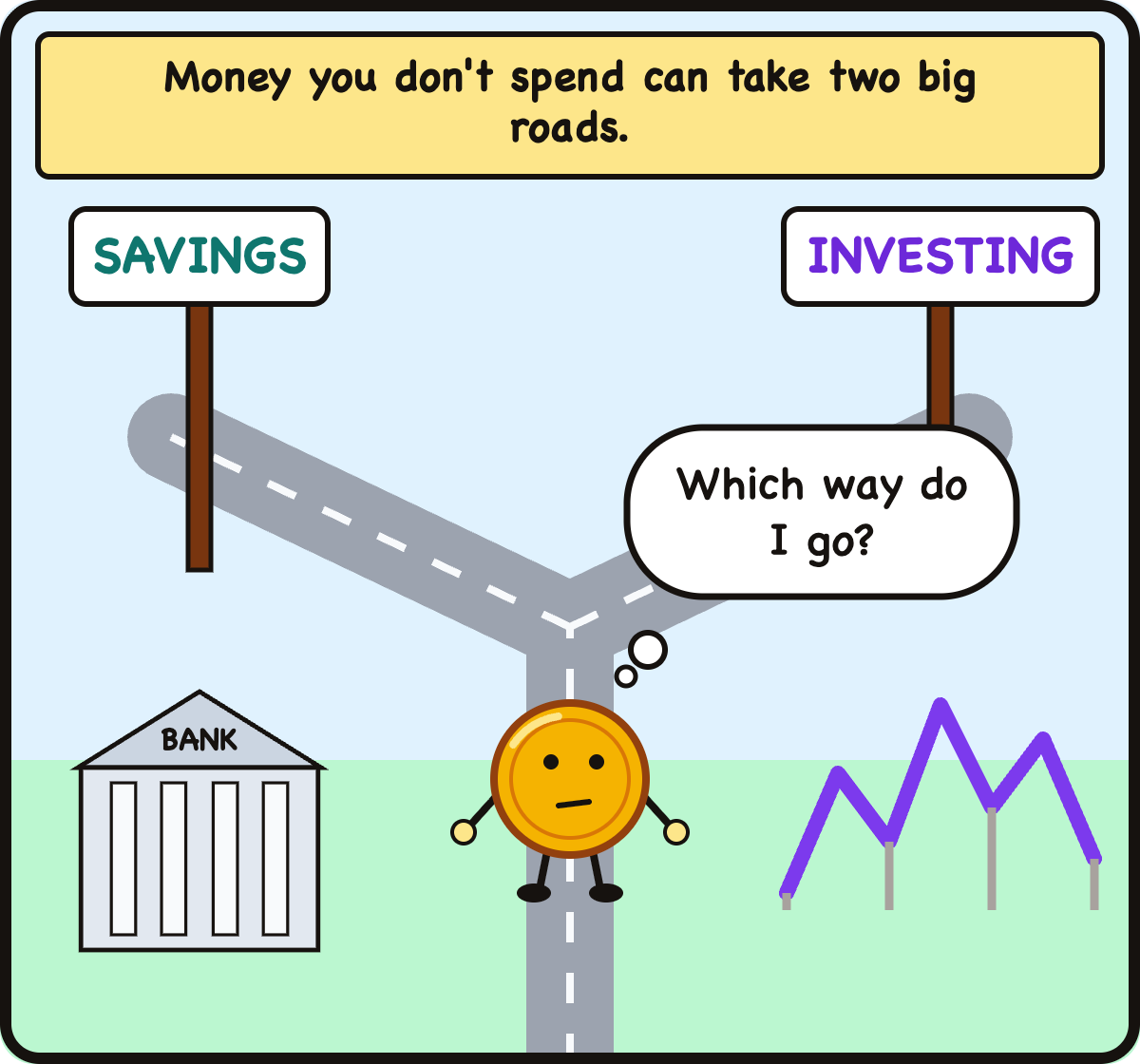
- Saving means keeping money in an account where the pounds you put in do not go down.
- Investing means putting money into something that could grow, but could also fall in value.
- Many people choose to sort out savings and expensive debts before thinking about investing.
What is saving?
Saving is putting money in a bank or building society account. The pounds you put in do not go down, and the account may pay interest (a small payment for letting the bank hold your money).
You can usually get at your money quickly. If a UK bank or building society fails, the Financial Services Compensation Scheme (FSCS) protects up to £120,000 per person, per banking licence (some banks share one licence, so check). This is the FSCS deposit protection limit from 1 December 2025.
What is investing?
Investing is using money to buy something you hope will be worth more later. That could be shares (small pieces of a company), bonds (loans to a government or company) or other kinds of lending.
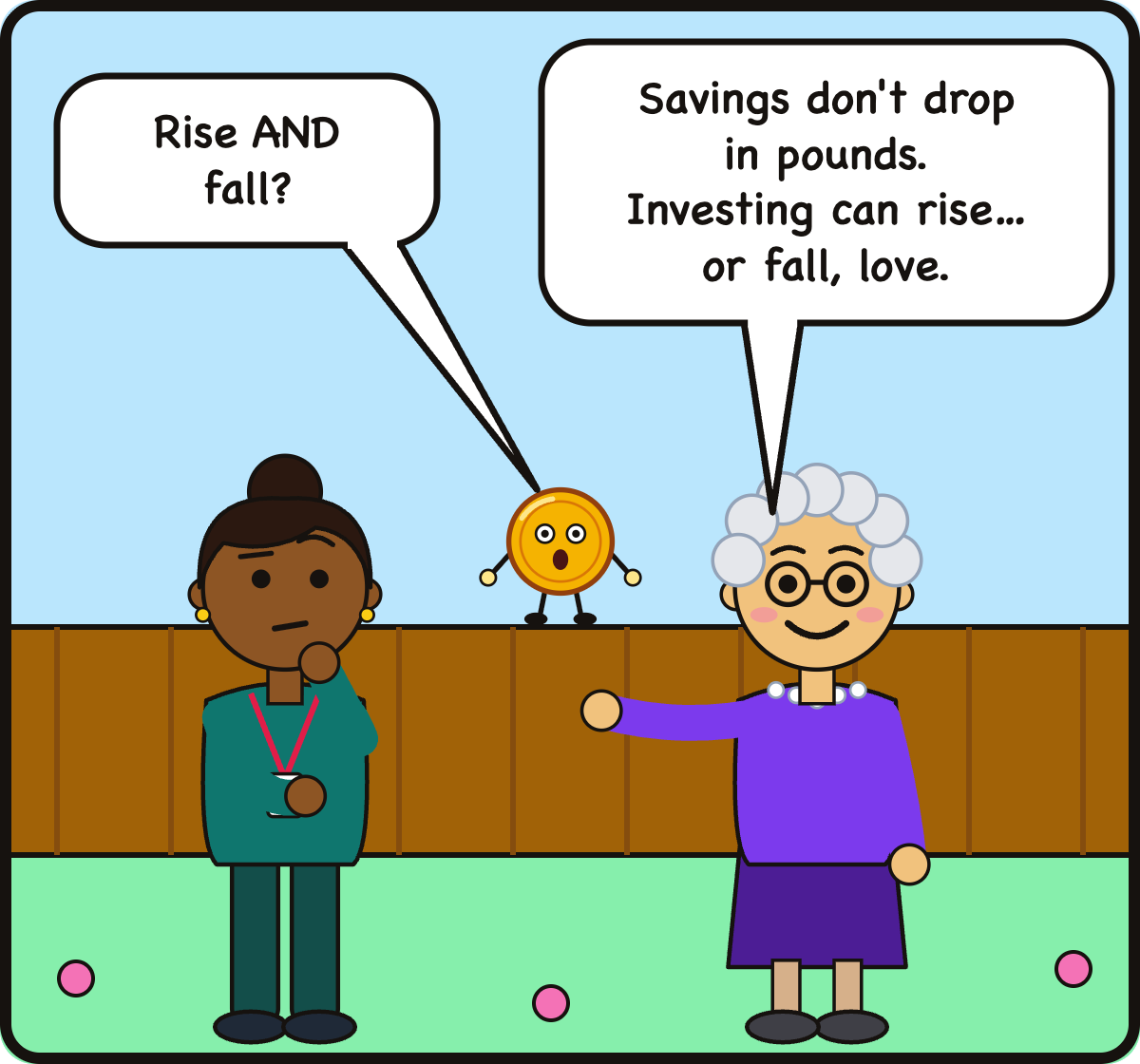
The key difference: an investment can fall in value. You could get back less than you put in. The FSCS does not pay out just because an investment loses value.
Saving vs investing side by side
| Question | Saving | Investing |
|---|---|---|
| Can the number of pounds go down? | No (rising prices can still shrink what they buy) | Yes |
| Can I get my money quickly? | Usually | Not always |
| Is the outcome known? | Mostly (rates can change) | No |
| Usually used for | Money you may need soon | Money you can leave alone for years |
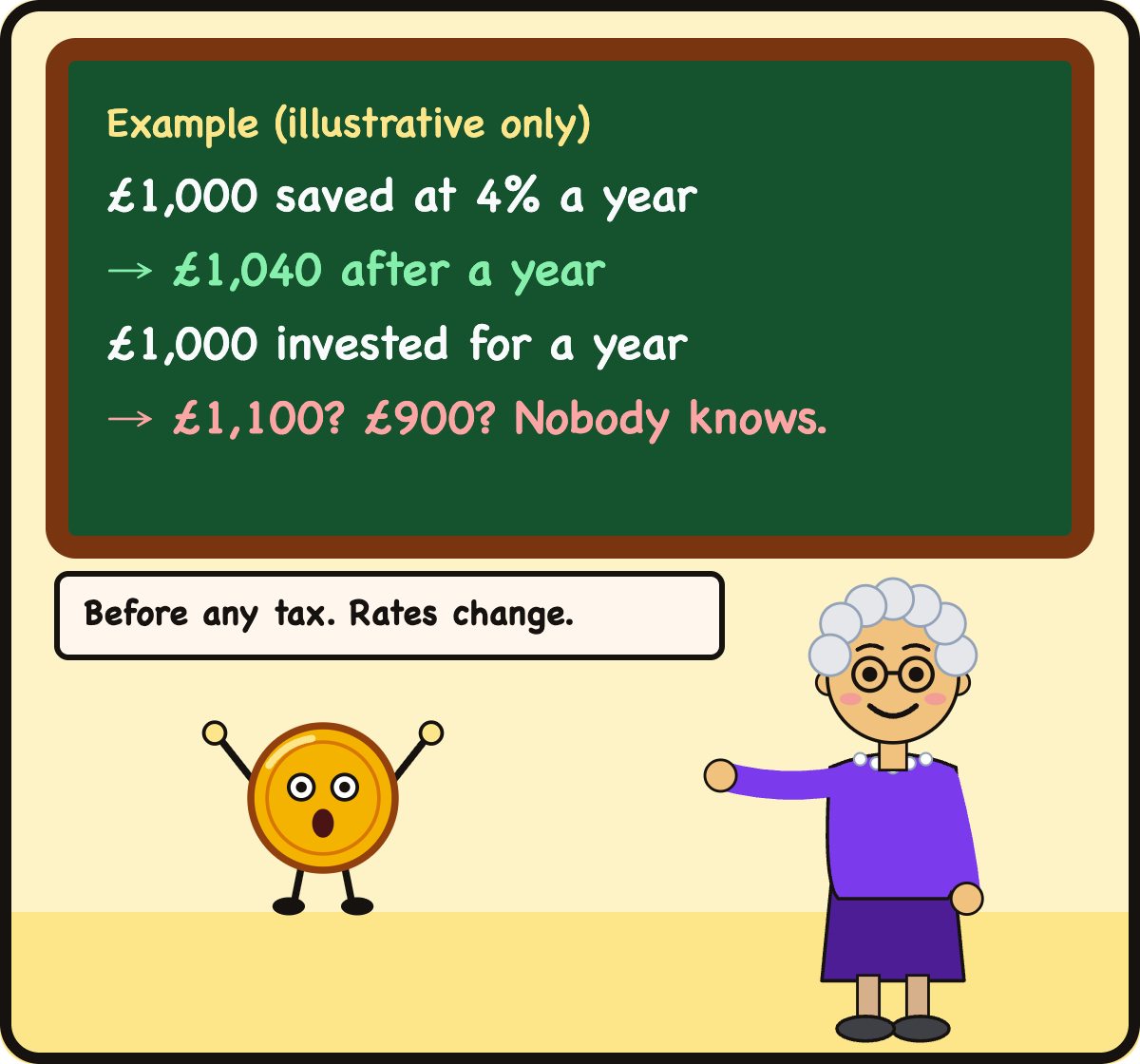
Example (illustrative only)
£1,000 in a savings account paying 4% a year becomes £1,040 after a year, before any tax.
£1,000 put into an investment might be worth £1,100 after a year. It might be worth £900. Nobody can know in advance. A gain is possible, and so is a loss.
Why this week's news matters
At the time of writing, the Bank of England has just raised its main interest rate, Bank Rate, to 4% (5 November 2026). Savings rates often move with it, though not always straight away.
Prices were rising by 3.5% a year in September 2026, according to the Office for National Statistics. When prices rise faster than your interest, your money buys a little less each year. Penny will show you why in episode 5.
Questions to ask before investing anything
- Could I cope if this lost some or all of its value?
- When might I need this money back?
- Do I understand exactly what I am buying?
- Have I checked the firm with the FCA's advice on spotting scams? Does the offer sound too good to be true?
Quick recap
- Savings do not fall in pounds. Investments can.
- Investing comes with a chance of a gain and a real chance of a loss.
- Many people sort out savings and debts before investing.
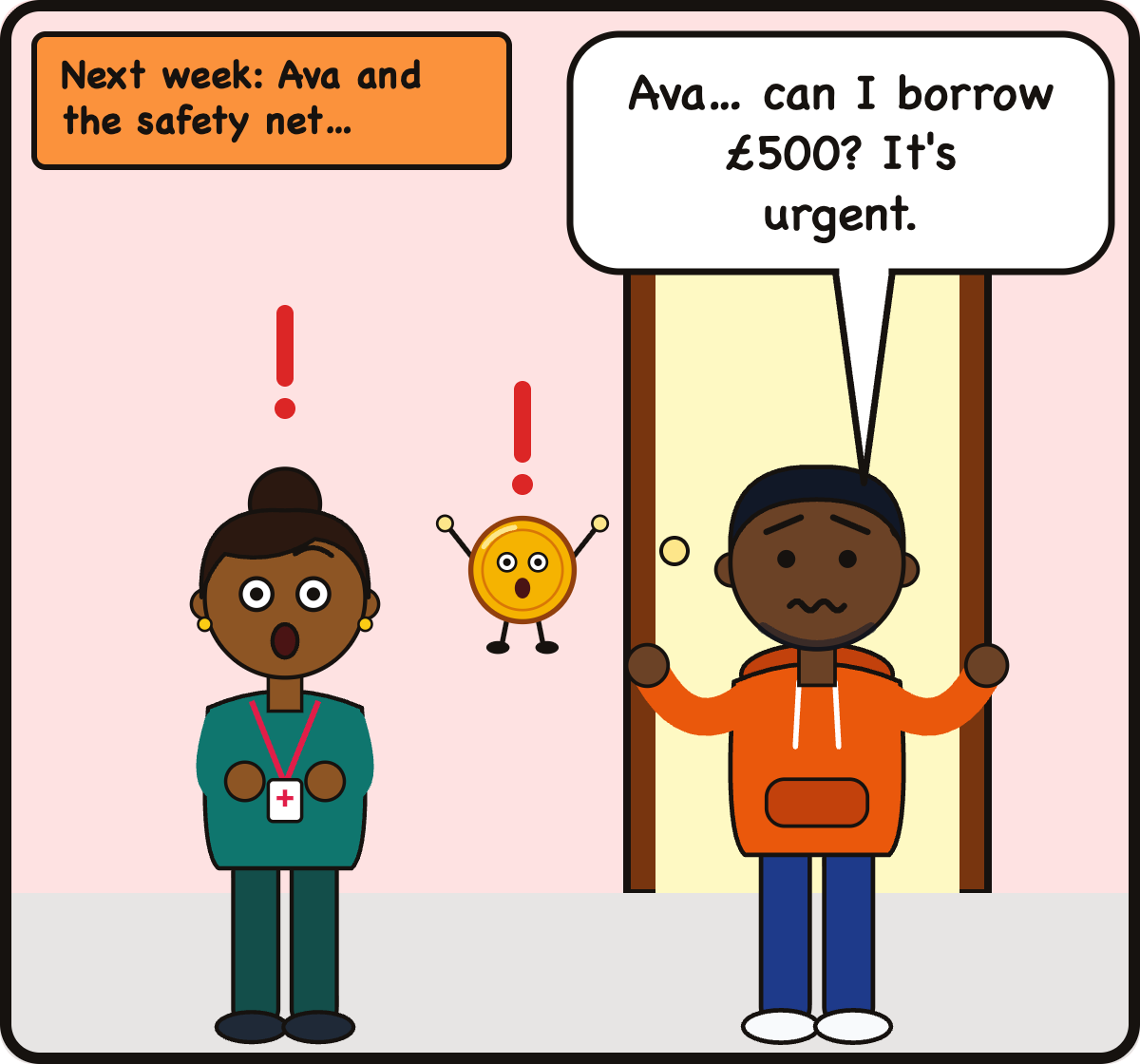
Next week: Leo needs £500, fast. What would Ava do if it were her? Episode 2: Emergency fund first, why it comes before investing.
This article is general information to help you understand money, not financial advice or a recommendation. Everyone's situation is different. If you are unsure, free and impartial guidance is available from MoneyHelper. Oxyile is not authorised by the Financial Conduct Authority and does not offer loans or investments to the public. The Money Street and its characters are fictional. Figures were correct at the time of writing.
Related tags
- Investor journey
- Week 1
- Saving
- Investing basics