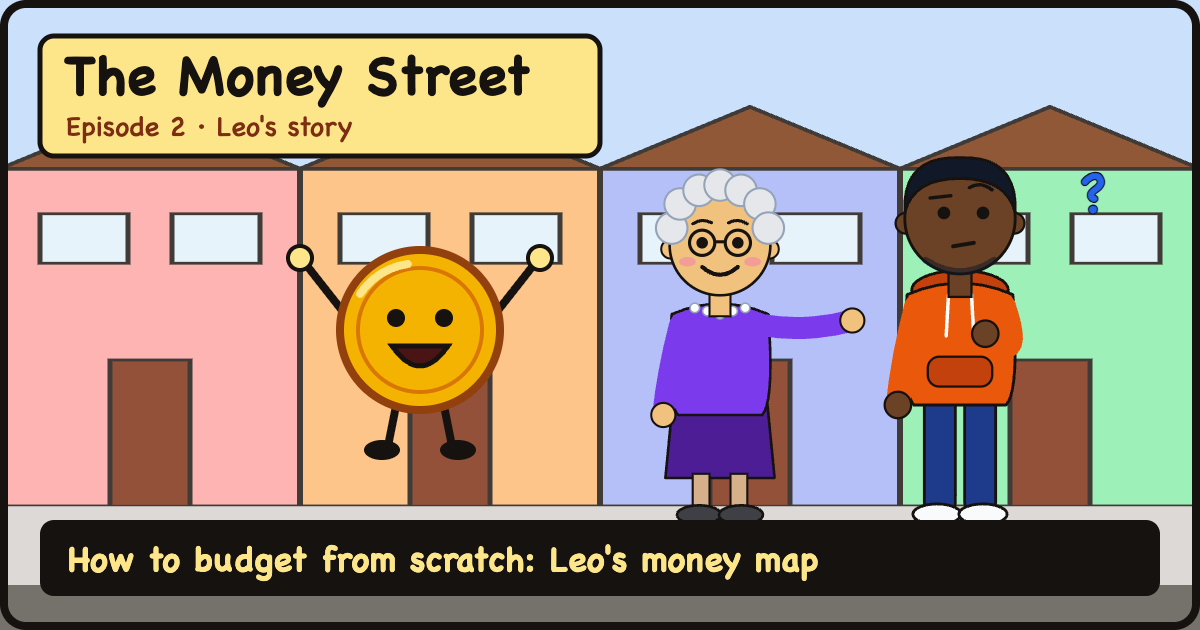
Borrower journey · Episode 2 · Oxyile Editorial
How to budget from scratch: Leo's money map
22 Nov 2026
Learning how to budget starts with one simple question: where does my money go? This week on The Money Street, Leo finds out. His scooter can be repaired for £500, but he has nothing saved. Nan Gwen shows him a simple three-pile method.
This is Leo's story, episode 2 of 52. If you missed it, episode 1 explains the cost of borrowing.
In a nutshell
- A budget is a plan for your money: what comes in, what must go out, and what is left.
- If your pay changes, some people plan on their lowest month.
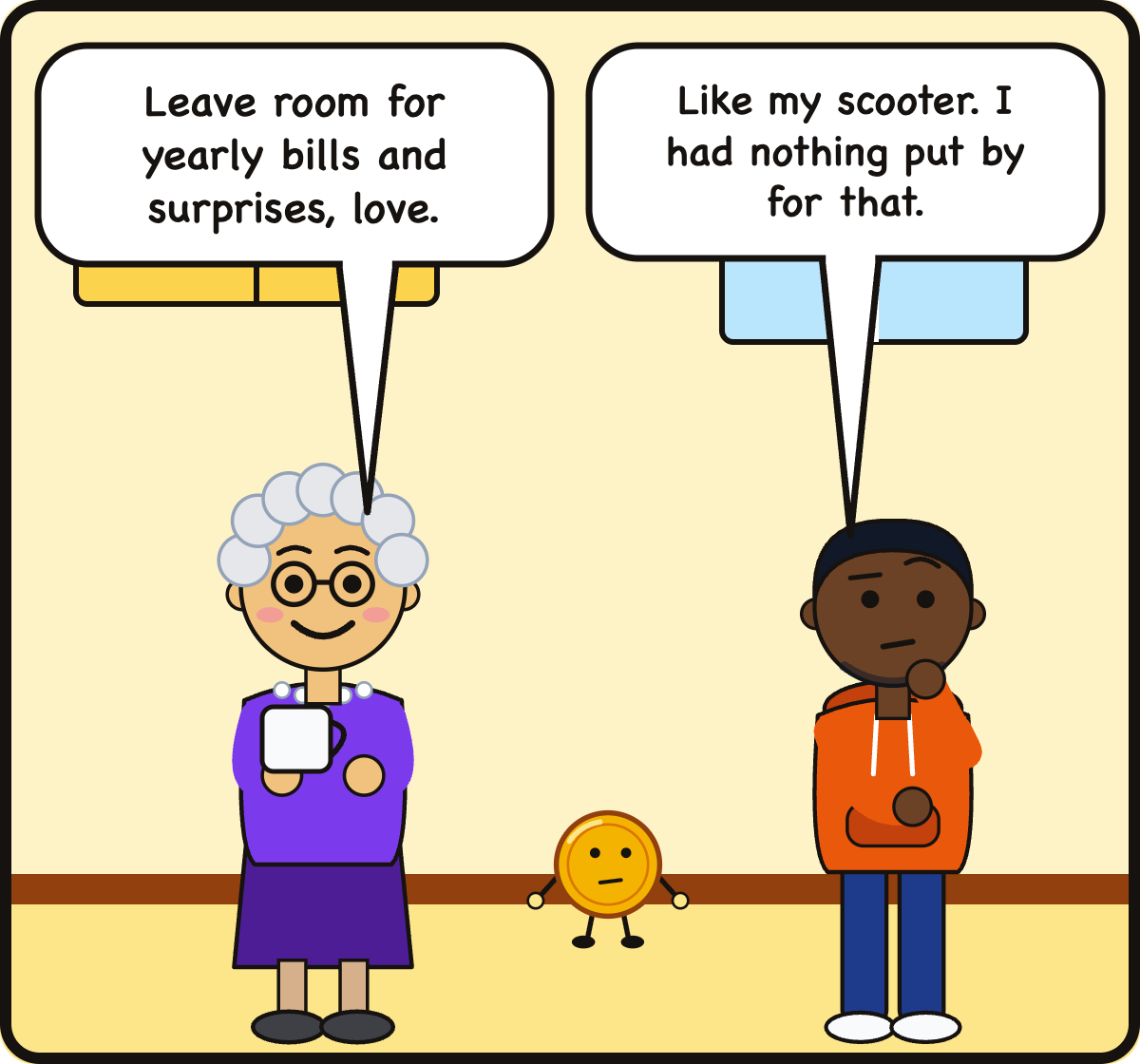
- A good budget leaves room for yearly bills and surprises.
Why a budget helps
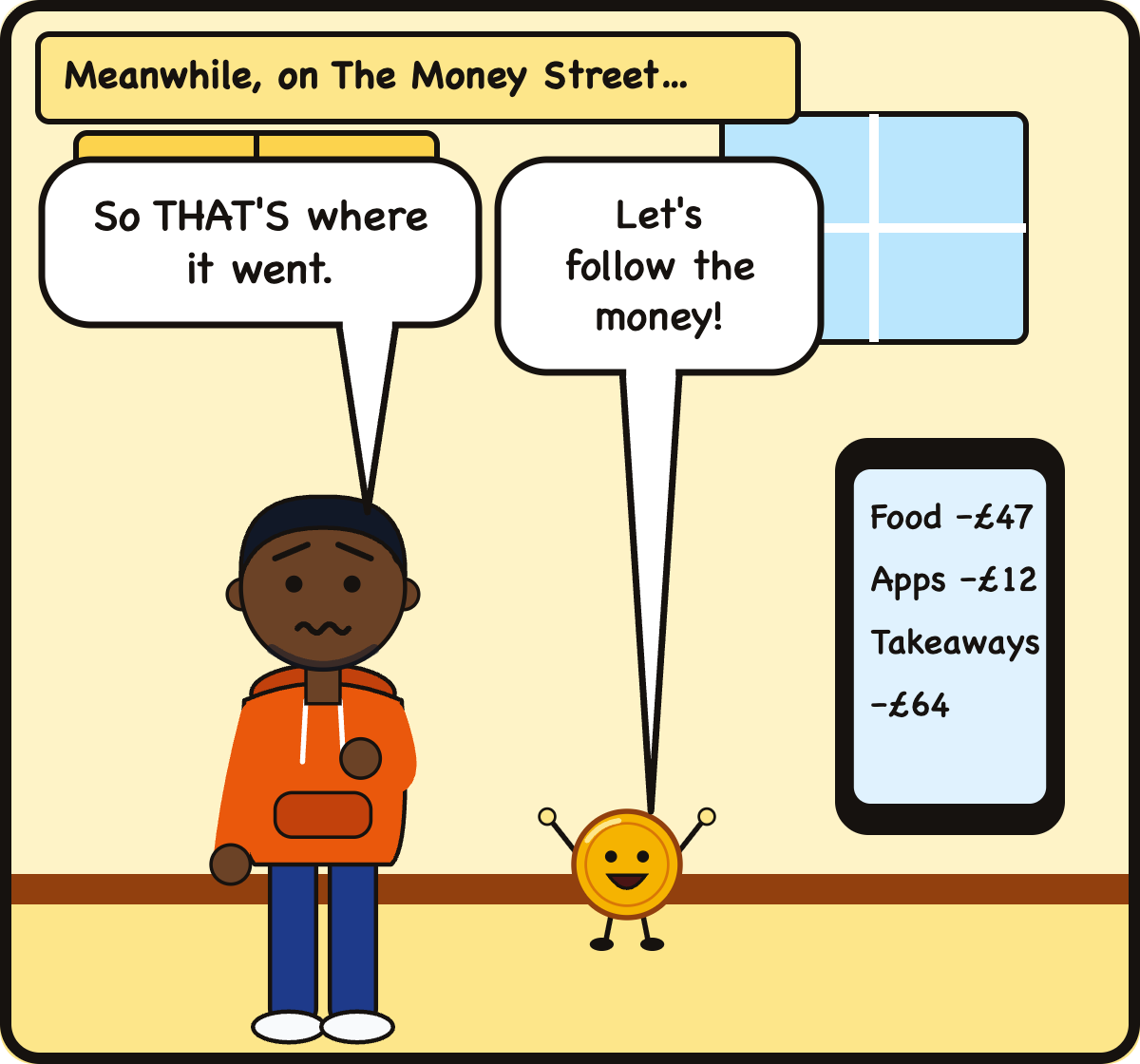
A budget is simply a plan for your money each month. It shows you where your money goes before it has gone.
It can also cut the need to borrow. When you can see a cost coming, you have time to plan for it.
How to budget in three piles
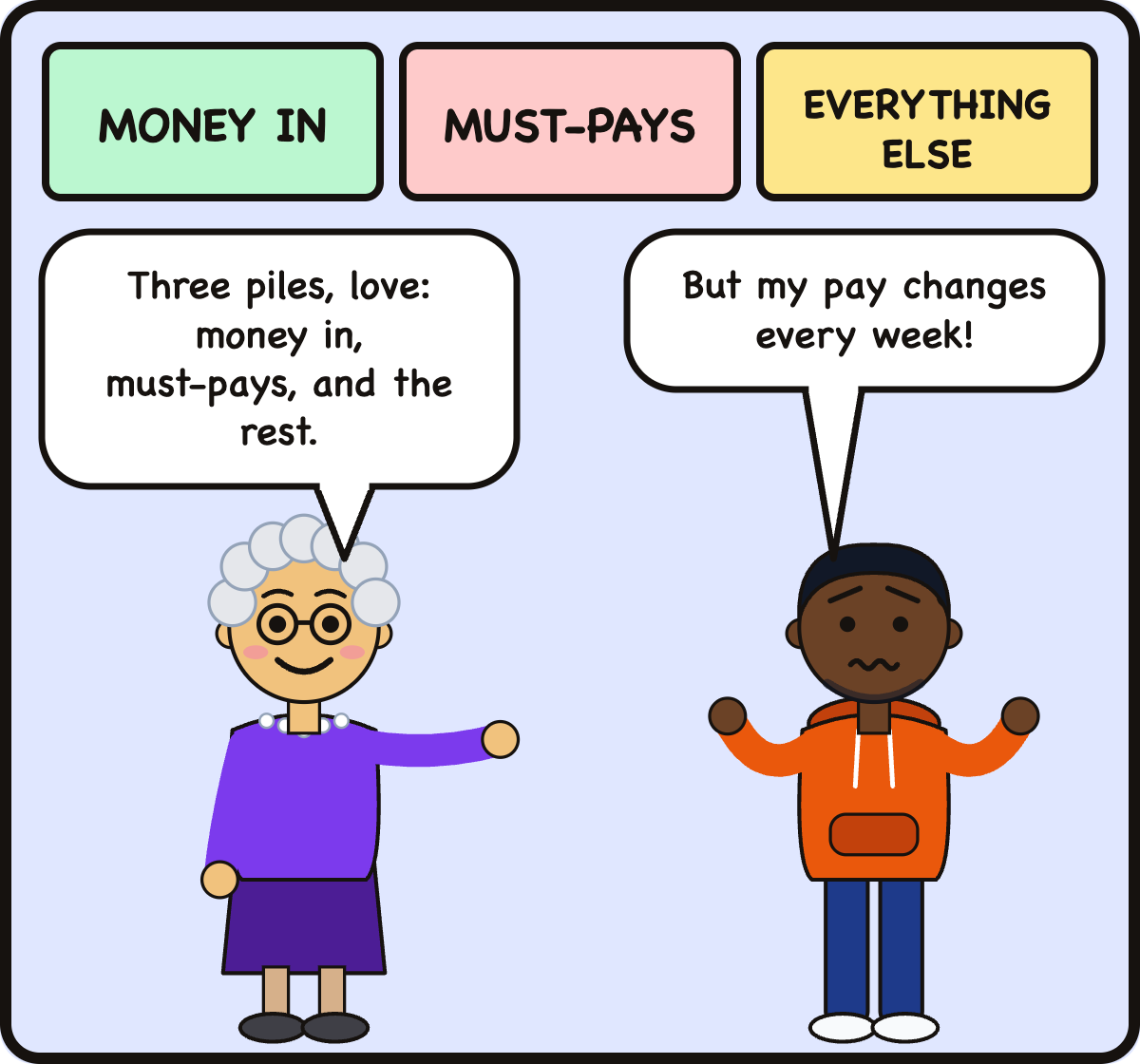
A simple place to start is your bank statements or banking app from the last month or two. Each payment goes into one of three piles.
- Money in: your take-home pay (after tax), plus any benefits or other income.
- Must-pays (essentials): rent, energy, food, phone, travel to work and any debt payments.
- Everything else: takeaways, apps, clothes, nights out and treats.
Then take must-pays and everything else away from money in. What is left is the room for saving and surprises.
MoneyHelper's free Budget planner adds it all up for you and shows what is left over.
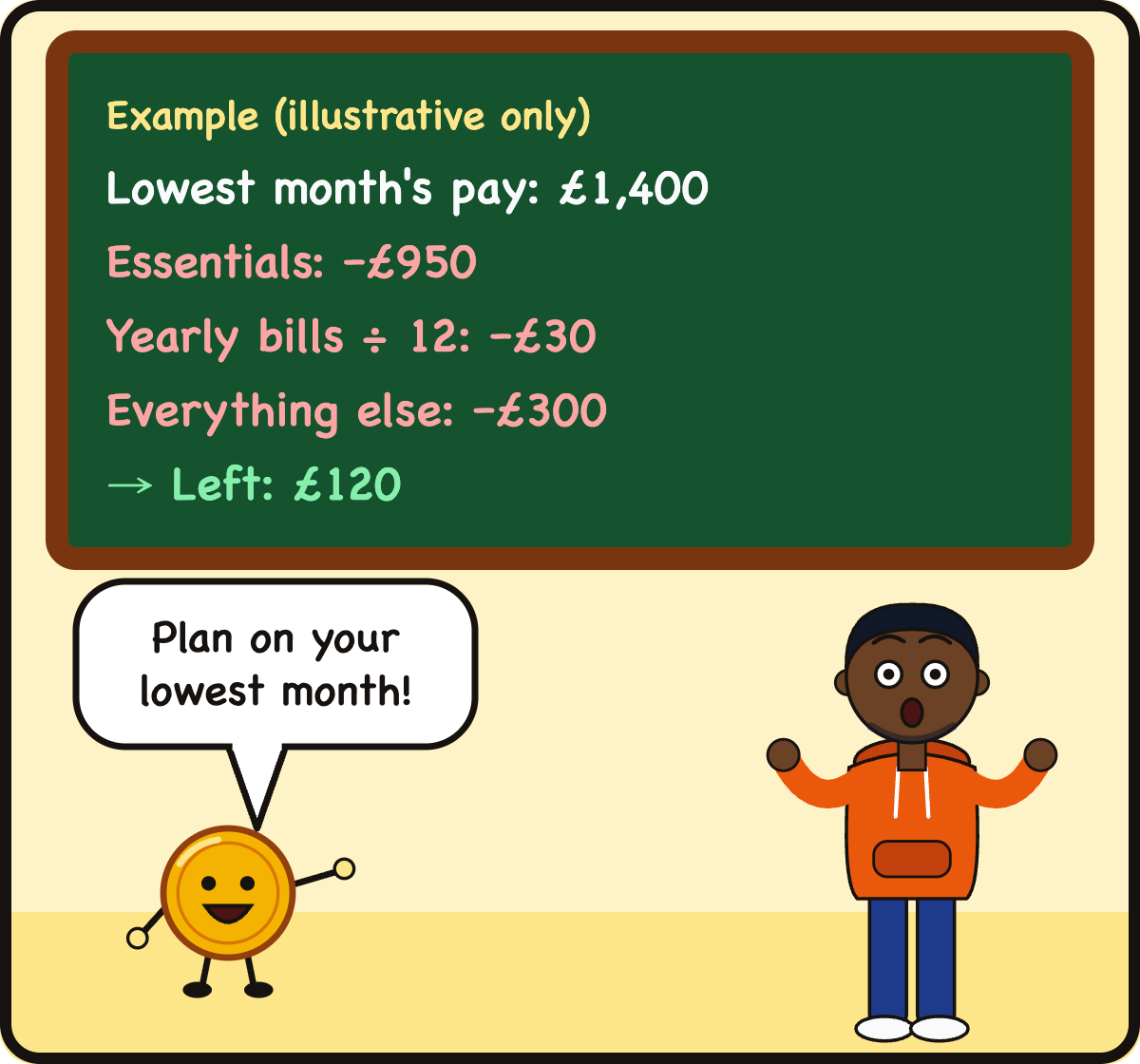
Example (illustrative only)
Leo is paid per delivery, so his pay changes. He looks back over a few months and uses his lowest one.
| Leo's month | Amount |
|---|---|
| Lowest month's take-home pay | £1,400 |
| Must-pays (rent, food, energy, phone, travel) | −£950 |
| Yearly bills: £360 insurance ÷ 12 | −£30 |
| Everything else | −£300 |
| Left over | £120 |
The sum: £1,400 − £950 − £30 − £300 = £120. In a better month, some people put the extra towards savings or surprises.
If your pay goes up and down
MoneyHelper's guide on budgeting with an irregular income suggests planning on your lowest monthly income. That way, the big costs are covered even in a quiet month.
Don't forget yearly bills and surprises
Bills that come once a year can wreck a monthly budget. Think of insurance, a TV licence or presents. One way to handle them is to divide each by 12 and put that amount aside each month.
Room for the unexpected matters too. Things break, as Leo knows.
Why this week's news matters
At the time of writing, prices were rising by 3.6% a year in October 2026, according to the Office for National Statistics (published 18 November 2026). When prices rise, your must-pays can creep up. Checking your budget every few months helps you spot it.
Questions for your first budget
- What was my take-home pay over the last few months?
- What are my must-pays, including yearly bills divided by 12?
- What did I spend on everything else?
- What is left, and is there room for surprises?
If the numbers don't add up
If your must-pays are more than your money in, you are not alone. Borrowing more can make things harder. Free, confidential help is available from charities such as StepChange, National Debtline and Citizens Advice.
Quick recap
- A budget sorts money into three piles: money in, must-pays and everything else.
- If pay varies, plan on your lowest month.
- A budget with room for yearly bills and surprises is easier to stick to.
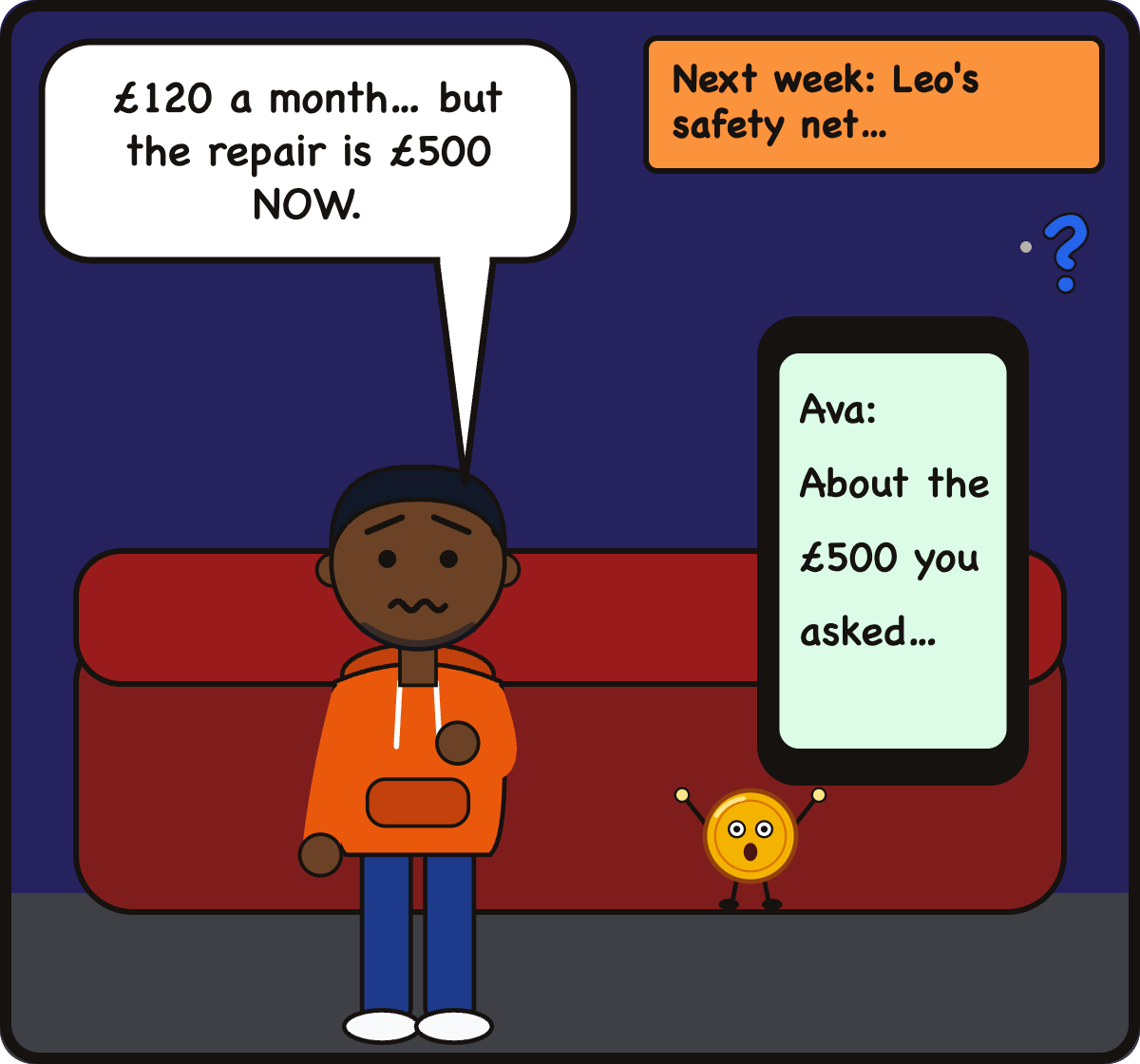
Next week: Leo has £120 a month left, but the repair costs £500 now. And what has Ava decided? Episode 3: A small savings buffer means borrowing less.
This article is general information to help you understand money, not financial advice or a recommendation. Everyone's situation is different. If you are unsure, free and impartial guidance is available from MoneyHelper. Oxyile is not authorised by the Financial Conduct Authority and does not offer loans or investments to the public. The Money Street and its characters are fictional. Figures were correct at the time of writing.
Related tags
- Borrower journey
- Week 2
- Budgeting
- Money basics