Investor journey · Episode 2 · Oxyile Editorial
Emergency fund first: Ava's safety net
22 Nov 2026
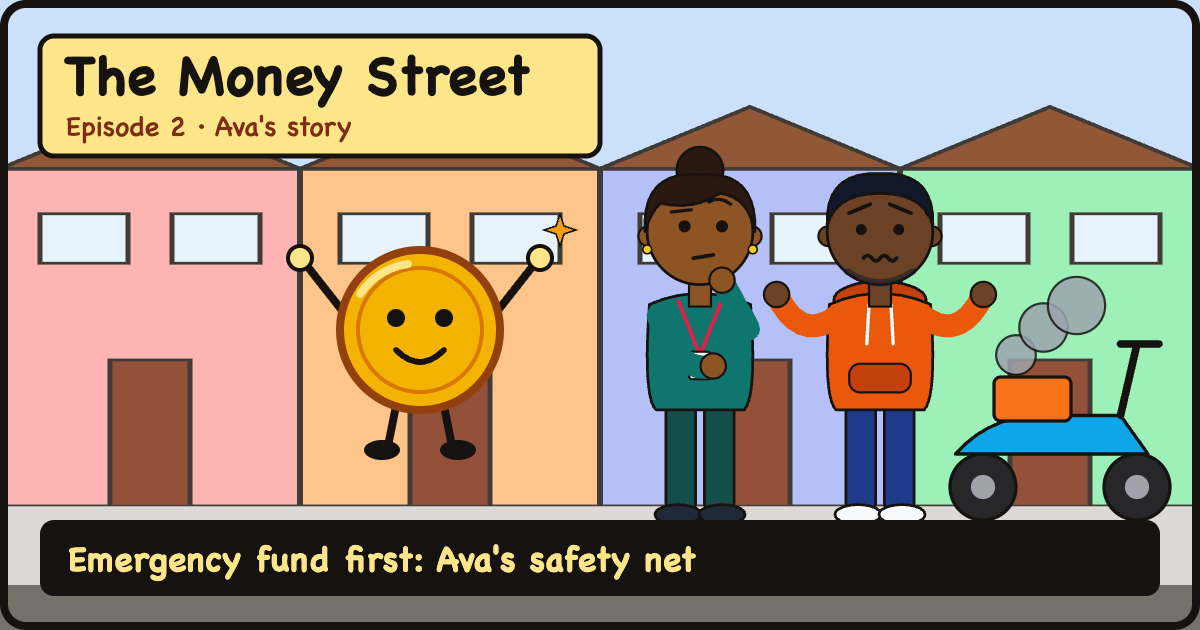
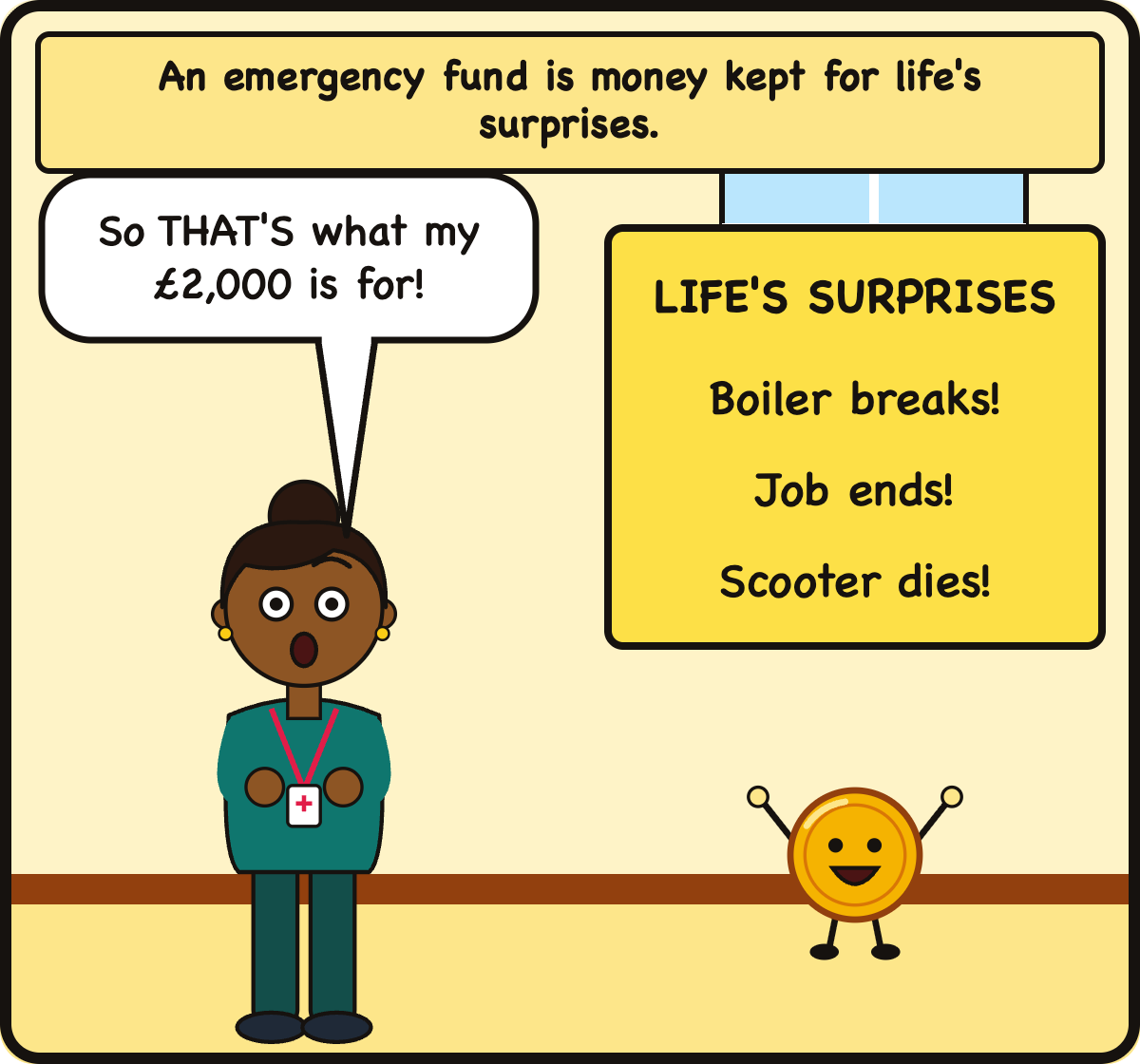
An emergency fund is money you keep aside for life's surprises. This week on The Money Street, the garage says Leo's old scooter can be fixed, but the repair costs £500. He has asked Ava for help. Before answering, Ava asks herself: what would she do if it happened to her?
This is Ava's story, episode 2 of 52. If you missed it, episode 1 explains saving vs investing.
In a nutshell
- An emergency fund is cash set aside for unexpected costs, like a broken boiler or a gap in pay.
- A common rule of thumb is three to six months of essential costs, but any amount helps.
- Many people build this fund before they think about investing.

What is an emergency fund?
It is money you do not plan to spend. It sits ready for things you cannot predict, such as a repair, a big bill or a drop in pay.
Without it, a surprise cost often ends up on a credit card or loan, which can make it much more expensive.
How big should an emergency fund be?
The free, government-backed service MoneyHelper gives a rule of thumb: three to six months of essential outgoings. These are the costs you cannot live without, such as rent, food, energy bills and travel to work. MoneyHelper's guide to emergency savings explains more.
Base it on your essentials, not your whole pay. That makes the target smaller and easier to reach.

Example (illustrative only)
| Ava's essentials each month | Amount |
|---|---|
| Rent | £700 |
| Food | £250 |
| Energy and other bills | £150 |
| Travel | £100 |
| Total | £1,200 |
Three months is 3 × £1,200 = £3,600. Six months is 6 × £1,200 = £7,200.
A first small goal, such as £500, can cover some surprise repairs. Ava already has £2,000 saved.
Where do people keep it?
MoneyHelper describes keeping it in an instant access savings account (one you can take money out of quickly, without a penalty). The interest rate on these accounts can change. If prices rise faster than the interest, the money buys a little less.
A UK bank or building society account is covered by the Financial Services Compensation Scheme (FSCS). If the firm fails, it protects up to £120,000 per person, per banking licence (some banks share one licence, so check).

Why not invest your emergency fund?
An investment can fall in value just when you need the money. If your boiler breaks while prices of investments are down, you might have to sell for less than you paid.
Some investments also take time to sell. An emergency fund needs to be there on the day.
Why this week's news matters
At the time of writing, prices were rising by 3.6% a year in October 2026, according to the Office for National Statistics (published 18 November 2026). When essentials cost more, the same three months costs more too. Some people check their target once a year.
Questions to ask about an emergency fund
- What do my essential costs come to in a month?
- What first small goal could I reach?
- Where would the money sit, and how quickly could I get it?
- Do I have any costly debts? That is next week's question.
Quick recap
- An emergency fund is cash for life's surprises.
- A rule of thumb is three to six months of essential costs. Starting small still helps.
- Many people keep it somewhere easy to reach, rather than investing it.
That night, Ava remembers something. She has been paying off £600 on a credit card, a little each month. What is it really costing her?
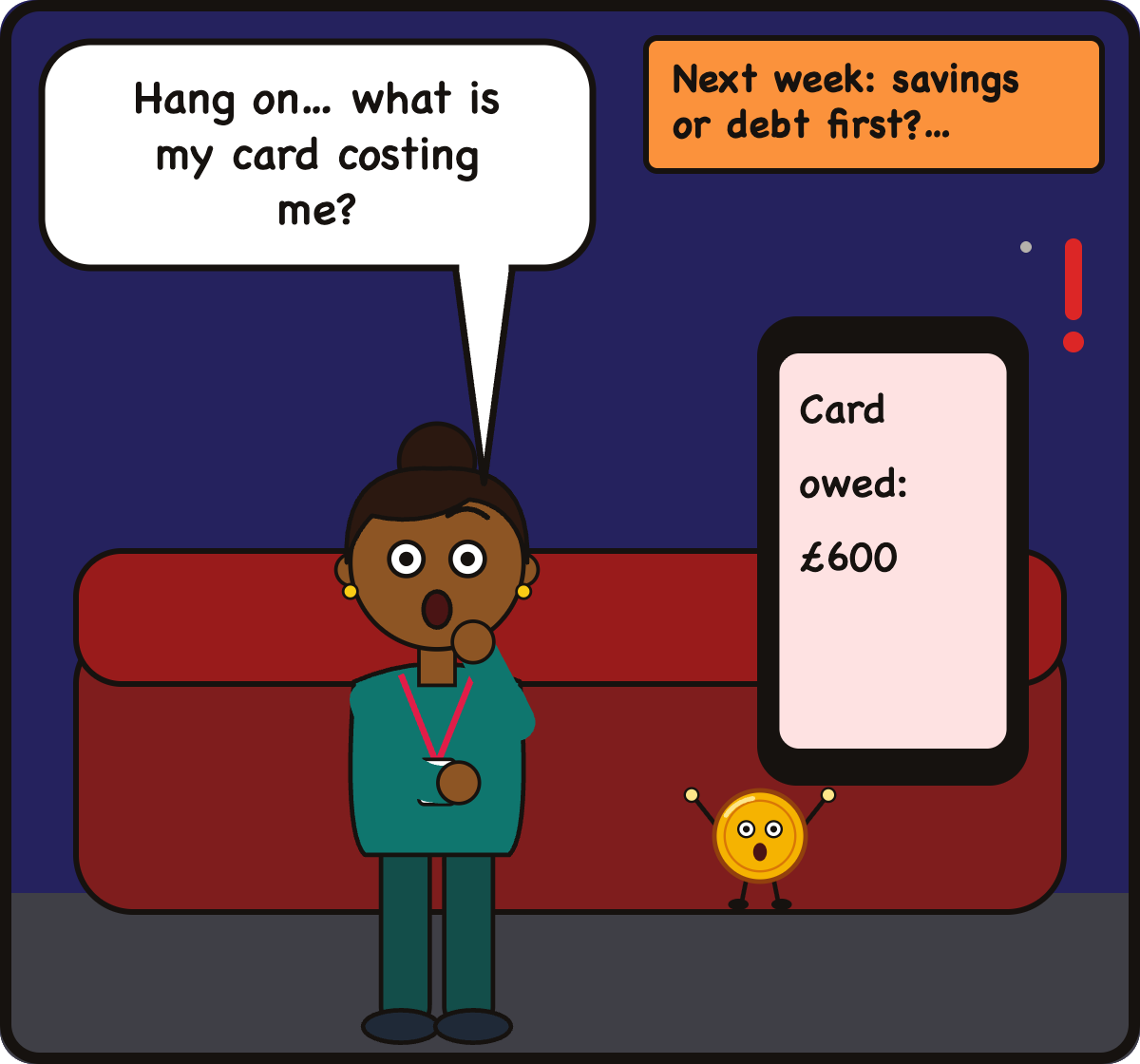
Next week: Should Ava clear her £600 card balance first, or keep saving? And what will she tell Leo? Episode 3: Pay off expensive debt before you invest?
This article is general information to help you understand money, not financial advice or a recommendation. Everyone's situation is different. If you are unsure, free and impartial guidance is available from MoneyHelper. Oxyile is not authorised by the Financial Conduct Authority and does not offer loans or investments to the public. The Money Street and its characters are fictional. Figures were correct at the time of writing.
Related tags
- Investor journey
- Week 2
- Saving
- Emergency fund